
Last updated November 20, 2026
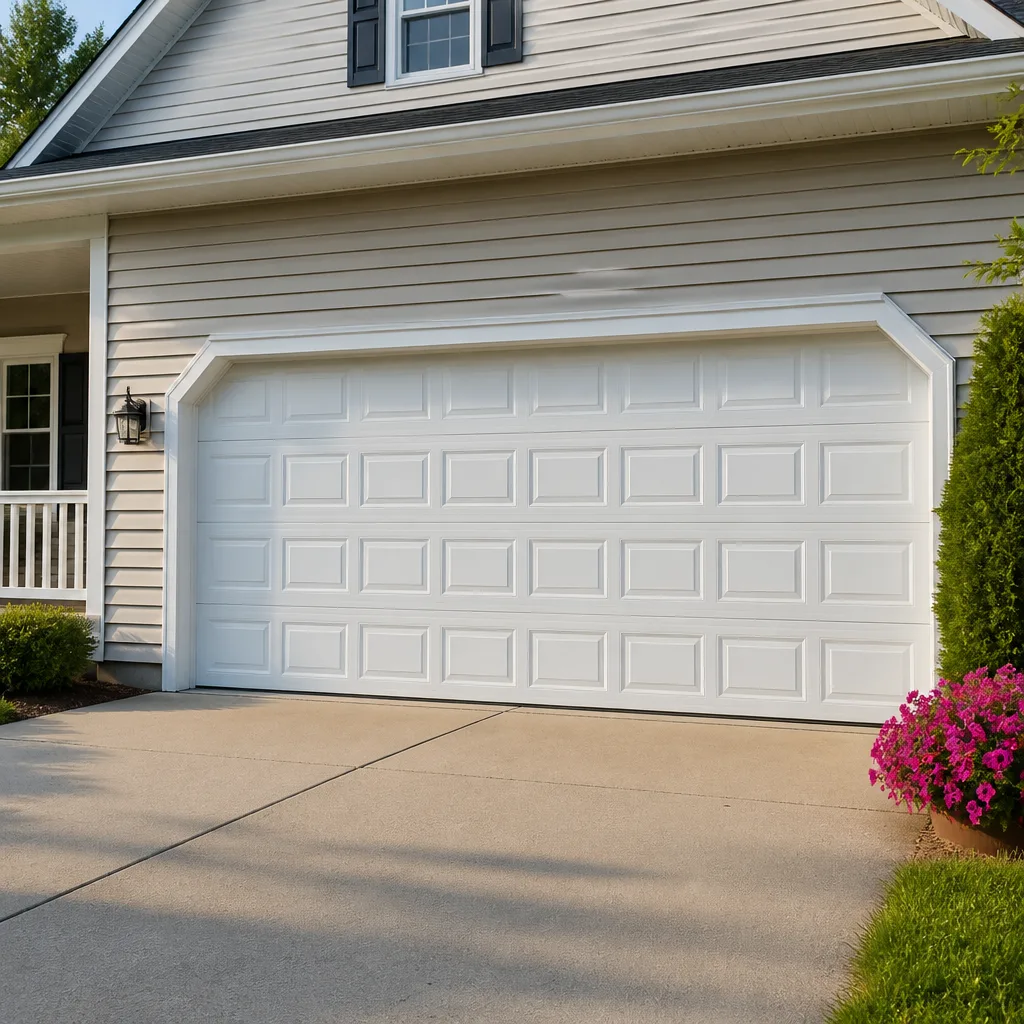 Raised-panel steel
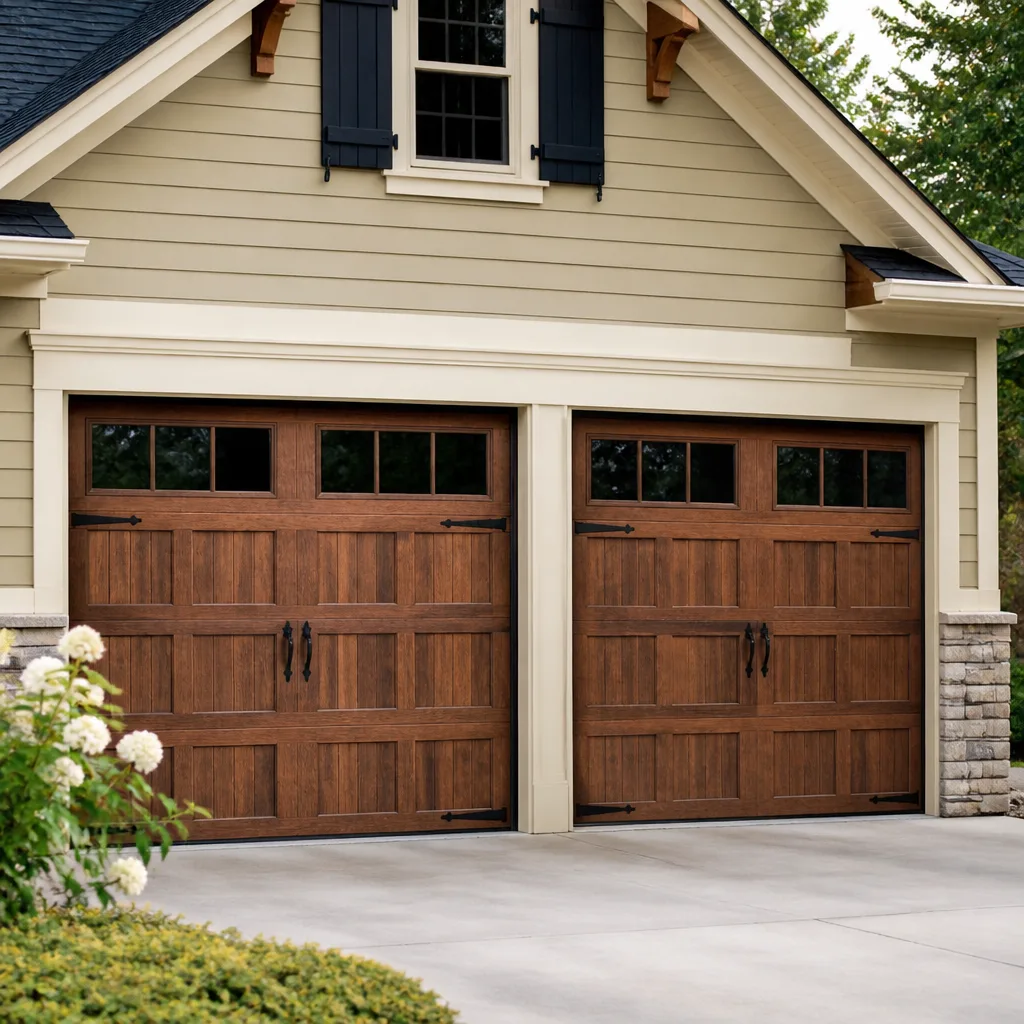 Carriage house
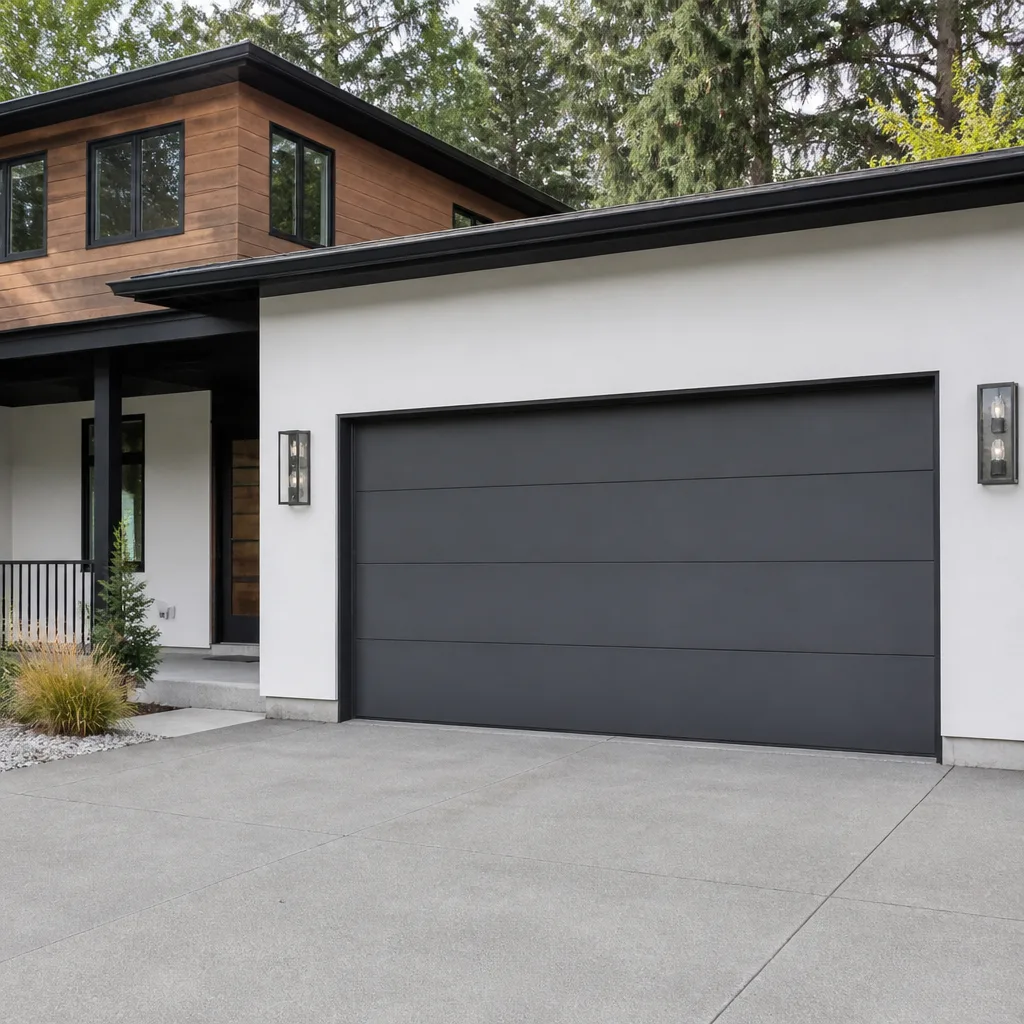 Modern flush
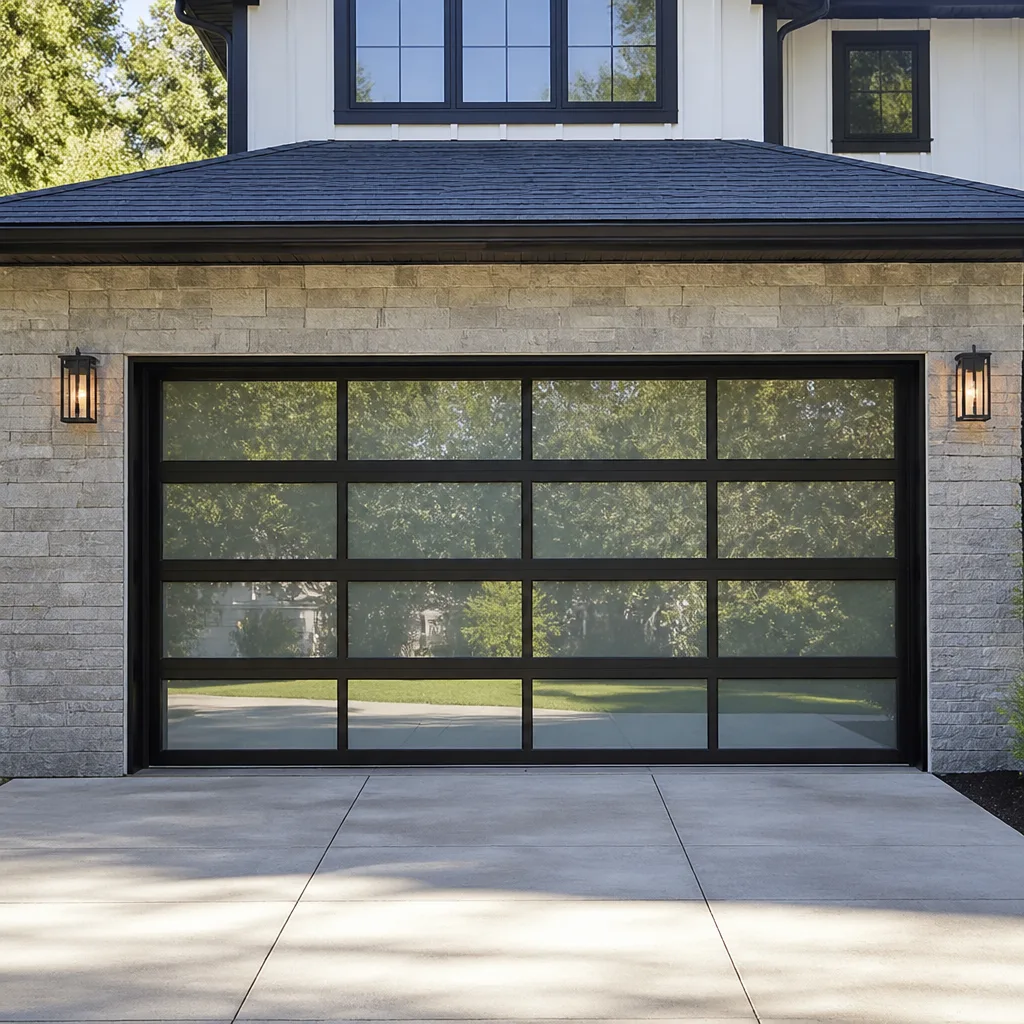 Full-view glass
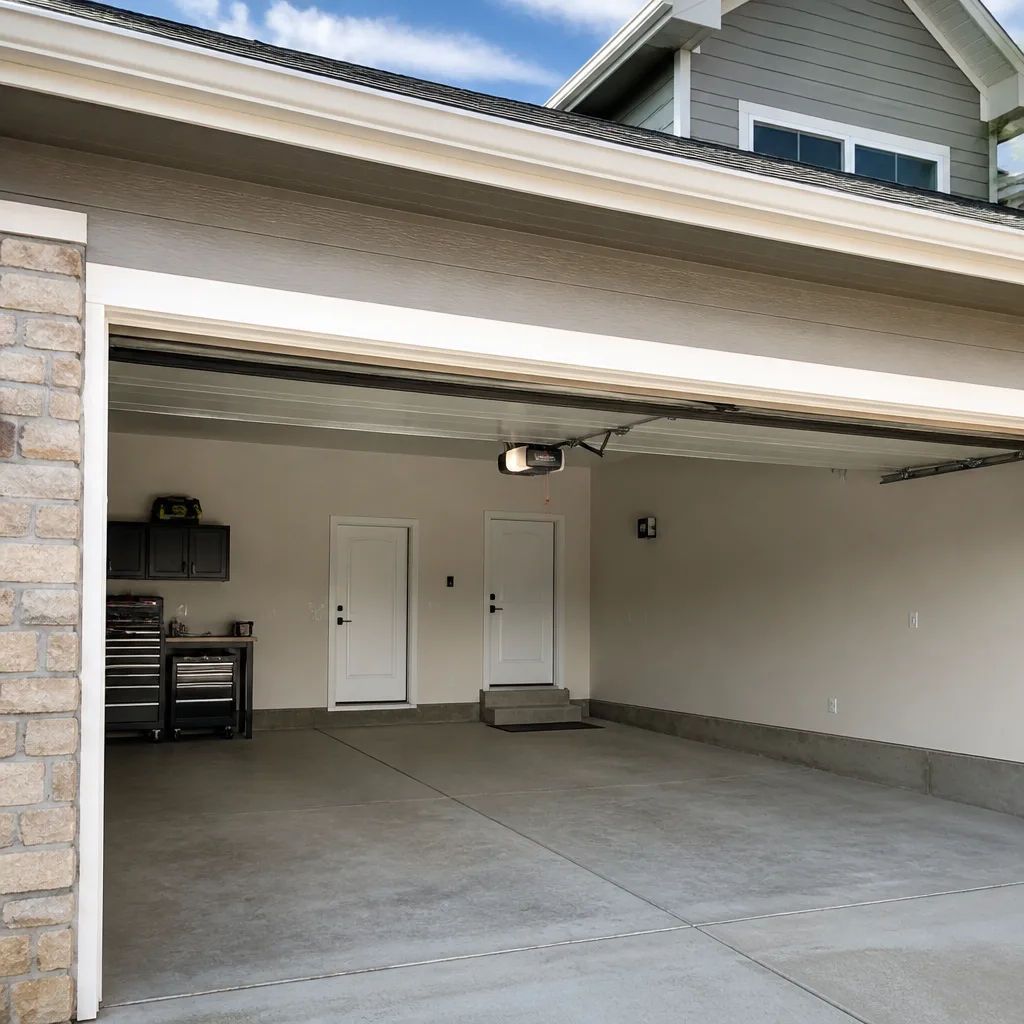 LiftMaster openers
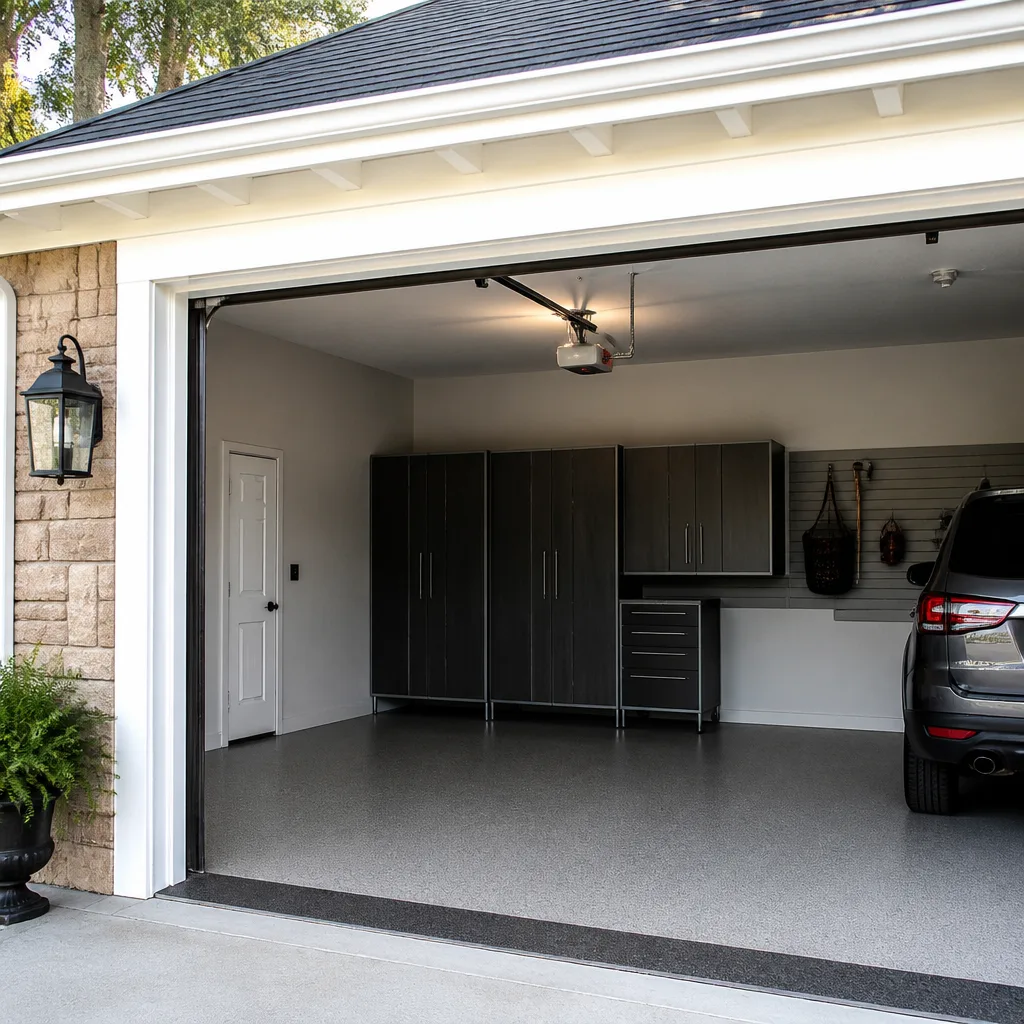 Chamberlain openers
Full 25-point door and opener safety check with every visit - springs, cables, rollers, tracks, and your LiftMaster or Chamberlain opener included
You get a price before we start. It does not change when the pro arrives.
Get your free estimateGarage Door Warning Signs: A Wanamaker Homeowner’s Reference Guide
Most garage door guides describe what’s already broken. This one is about the earlier signals, the ones that show up weeks or months before a door actually fails. A garage door that hesitates for half a second before it moves is not “just slow.” It’s usually showing early opener motor strain or a binding track, and left alone that strain tends to burn out the drive gear in a matter of months. Homeowners across Wanamaker walk past these small clues every day without registering them. What follows is a reference for catching the subtle stuff early, telling mechanical problems apart from electrical ones, and knowing which signs mean stop the door now versus which let you schedule a repair on your own timeline.
Quick Answer
The earliest garage door warning signs are a half-second hesitation before the door moves, a new sound (grinding, popping, or squealing) on the same cycle you’ve heard a thousand times, a door that lifts faster on one side, and any visible fraying on the cables at the corners. Three signs mean stop using the door immediately and call a professional: a broken spring, a snapped cable, and a door that reverses on its own mid-travel. Everything else usually gives you a few days to schedule service.
Styles & brands we work with
- Raised-panel steel
- Carriage house
- Modern flush
- Full-view glass
- LiftMaster openers
- Chamberlain openers
Table of Contents
- What the Sound Tells You: Grinding, Popping, and Squealing
- The Visual Clues You Walk Past Every Day
- Reading the Door’s Movement: Jerky, Uneven, or Reversing
- Three Signs That Mean Stop Using the Door Now
- Signs That Give You a Few Days to Schedule Service
- Wanamaker Climate and How It Affects Your Door
- How to Document Warning Signs Before You Call
- The Simple Checkup Routine That Catches Most Failures Early
What the Sound Tells You: Grinding, Popping, and Squealing
Your door has a baseline sound. It’s the same cycle every time it opens and closes, and that consistency is the reason a new noise is so easy to miss. Your ear stops registering it. On the day the pitch changes, most homeowners think they imagined it. In our experience, the character of the noise is a direct pointer to which component is wearing.
Here’s how to sort the three most common sounds by what they mean and how quickly they need attention:
- Grinding is metal on metal, and it almost always points to rollers, hinges, or a track that has gone dry or bent. It’s the most urgent of the everyday noises because grit and friction chew at the parts faster with each cycle. Grinding that gets louder over a few weeks is usually a roller or hinge that’s failing.
- Popping is a sharper, sudden sound, often once per cycle at the same point in the travel. It usually means a panel is binding against the track, a hinge plate is loose, or the torsion hardware is under abnormal stress. Popping is the one we treat with the most caution because the forces at the top of the door are high.
- Squealing is the least urgent of the three. It’s typically dry rollers or a worn bearing, and it’s the easiest to address before a real problem develops. Squealing ignored for a long time can still accelerate wear on the opener motor, so it isn’t a noise to just live with.
The test is simple. Stand in the doorway of your home, not in the garage, and listen to a full open and close. If the sound is new or you can’t place where it’s coming from, that’s enough reason to have it looked at. We work on the brand you already have, whether that’s a Clopay, Amarr, or Wayne Dalton system, so a technician can usually identify the noise source on the first visit.
The Visual Clues You Walk Past Every Day
The noise is the alarm. The visual clues are the record of what’s been happening quietly for weeks. Most of these live in the corners of the door frame and along the bottom edge, and you pass them every time you back the car out.
Start with the cables. Look at the two cables that run down the sides of the door and into the bottom brackets. Fraying shows up as looped or bent wires, or a cable that looks like it’s starting to twist out of itself. A single kinked strand is a warning. A popping, out-of-place strand is a problem. Cables are under high tension, and they’re one of the components you should never handle yourself.
Next, look at the bottom gap. With the door closed, crouch down and look across the bottom edge. An uneven gap, one where the door meets the floor flush on one side and floats a finger’s width on the other, usually means the door is out of balance or a cable is stretched. It can also mean the concrete under the door has settled, which is common in older Wanamaker garage floors.
Then step back and look at the panels. Bowing shows up as a panel that curves inward from the hinge line, especially the top panel near the spring. Any bowing in the top panel means the door is under stress that it shouldn’t be, and you should stop cycling it until a technician has looked at it. Panel bowing rarely fixes itself.
Finally, check the tracks. Bent or pushed-in track sections, usually on the curved part at the top or the horizontal run above the door, cause the rollers to hang and the door to bind. Take a photo of anything you’re unsure about. A photo taken while the door is at rest at floor level is easy to compare against a week later.
Reading the Door’s Movement: Jerky, Uneven, or Reversing
Movement is where mechanical and electrical problems get separated. Watch the door through the full open and full closed cycle, and note three things: lift smoothness, speed balance between sides, and whether it stops or reverses at any point.
- Jerky lift or a stutter mid-travel. The door moves a section, stops, then continues. This is mechanical most of the time. A binding track, a bad roller, or a failing spring is the usual cause. If the door stutters at the same point every cycle, it’s mechanical. If it stutters randomly, it may be electrical.
- Faster on one side. Watch the gap between the side of the door and the track on each side while it lifts. If one side gets ahead of the other by more than a fraction of an inch, one of the cables has stretched or one of the springs is failing to carry its share. This is a balance problem and it’s mechanical.
- Reversal mid-travel. The door starts up, stops, and reverses back down without hitting anything. On a modern opener this usually points to a sensor, wiring, or logic-board issue rather than the door hardware. If the door reverses on the up-travel consistently, stop using it and call for help. On the down-travel, a reversed door can mean an obstruction the sensor is reading. Clear the doorway and try once more before you call.
For genuine opener problems, we handle garage door opener repair on the major brands, including Craftsman and LiftMaster units that are decades into their service life. The distinction matters because an opener that’s straining to lift a binding door will fail eventually, and a technician solving the opener without solving the door below it is only putting off the next visit.
Three Signs That Mean Stop Using the Door Now
Some warning signs give you a few days. These three give you minutes. The force stored in a torsion spring or a tensioned cable is enough to injure a person, so treat these as a hard stop until a trained professional has been on-site.
- A broken spring. If you hear a loud bang from the garage and the door won’t lift more than a few inches by hand, the spring has likely snapped. The door will feel extremely heavy and may not open at all. Don’t try to force it, and don’t try to pull on the door by hand to test whether it’s openable. Springs are the most dangerous single component in the garage, and spring repair is the one repair we never advise a homeowner to attempt. If you’ve had a spring break, our garage door repair team handles that as a dedicated service.
- A snapped cable. Cables rarely fail without warning. Look for a cable that’s come off its drum or is hanging loose with frayed ends. A slack cable on a door under spring tension is a serious safety issue. Don’t operate the door, and don’t try to reattach the cable. Once a cable fails, one side of the door is no longer supported and the door can drop unevenly.
- A fully bowed top panel. If the top panel has visibly curved inward and the door no longer sits flush in the frame, the door is being held under abnormal stress. Operating it risks further panel damage and puts spring hardware under additional load. Stop using it and book a technician.
In all three cases, the safest move is to leave the door in the position it’s in, keep the vehicle out of the garage if you can, and call (855) 593-3820. We answer 24/7. Fast dispatch from 7am to 7pm, Sunday through Friday. A call outside dispatch hours is booked into the next opening.
Signs That Give You a Few Days to Schedule Service
Not every warning sign is an emergency. The signs below are the ones you can book an appointment for on your own timeline, provided they don’t get worse in the meantime. If any of these turn into one of the three stop signs above, upgrade the call.
- Consistent squealing on every cycle. Dry rollers or a failing bearing. It’s wearing faster than it has to, but it isn’t going to fail this afternoon.
- A slight wobble in the door as it lifts. One panel is running a little off the track, usually from a worn roller. Wobble that grows fast is more urgent than wobble that holds steady.
- A door that’s noticeably quieter or slower than it used to be. A slow-grinding opener motor is an early sign of strain, and addressing it early is cheaper than letting the drive gear fail.
- A single frayed strand on a cable. A cable with one popped strand is on the way out. It’s not safe to ignore, but it’s typically a scheduled repair rather than an emergency call.
- A remote or keypad that works some of the time. Intermittent operation usually points to a battery, a sensor alignment, or the opener logic board. It’s worth a scheduled visit rather than a same-day call.
- A garage door that’s increasingly uneven at the bottom. One side of the door sitting a bit higher than the other, without any of the stop signs present, is a balance issue. It’ll put extra load on the opener and the springs over time.
When you book on your own timeline, the estimate is free and the price is set per job by a written estimate before any work starts. For any door that’s still opening but not running right, we’d rather see it early. And if the diagnosis points to needing a whole new door, we handle garage door installation as its own service, with a free measure and a written price rather than a same-day rush.
Wanamaker Climate and How It Affects Your Door
Wanamaker sits in central Indiana, which means four real seasons with cold winters and warm, humid summers. That swing is hard on garage door hardware. The steel of the door, the tracks, and the springs all expand and contract across the year, and the components that don’t have room to move take the stress.
What that means for a Wanamaker homeowner:
- Winter is when roller and hinge squealing starts. Cold weather thickens lubricant and stiffens the rollers, so a door that ran silently in October starts to groan in December. Catching it in the fall with a simple lube is easier than chasing the noise in January.
- Spring thaw is when cable issues show up. The freeze-thaw cycle loosens the anchors and stretches cables. If you notice a slightly wavy bottom gap in March, it’s often a cable responding to the season, not a track coming loose.
- Summer humidity speeds up panel and hardware corrosion. Hinges, screws, and bottom brackets rust first. The rust you can see is the rust that’s already started on the pivot points. A quick visual once in July catches most of it.
- Indiana weather brings wind-driven rain and the occasional hard storm. After a heavy storm that’s pushed water past the bottom seal or blown debris into the tracks, inspect the door before cycling it. A tracked obstruction you missed is the most common cause of a door that binds or reverses mid-travel.
We don’t get salt air in central Indiana, so corrosion from coastal weather isn’t part of the picture here. The bigger culprit is seasonal movement and the temperature swing itself. The local differences between older neighborhoods downtown and newer construction on the edge of Wanamaker are mostly about door age and the type of opener, not the weather. Old wood-panel doors and older chain-drive openers will show wear differently than newer insulated steel doors with belt-drive systems, which is why a technician’s first question is always about the brand and year of the door.
How to Document Warning Signs Before You Call
The diagnosis call takes minutes instead of a back-and-forth guessing session when the homeowner walks in with photos and a description. Five minutes of prep saves everyone time, including you.
- Photograph the door from three angles. One wide shot from outside that shows the whole door head-on. One shot from inside the garage looking up at the spring, torsion bar, and opener rail. One shot of the bottom edge with the door fully closed.
- Photograph the specific signal. If a cable is frayed, get close to it. If a panel is bowing, angle the shot with a straight edge against it. If the bottom gap is uneven, a photo taken from the floor looking across the gap shows it better than a photo taken standing up.
- Film a full open-and-close cycle. Thirty seconds of video is worth more than three paragraphs of description. Record it at normal speed, and if you can, record it again in slow motion on your phone. The half-second hesitation a homeowner can’t describe is obvious in slow motion.
- Write down what you noticed first, and when. “The squeak started about three weeks ago and got worse in the last week” is a specific, useful history. “It just started making noise” is not. Note whether the door was used heavily in the days before the sound changed.
- Note the brand on the door and the opener. A quick photo of the opener unit’s label and the door’s badge is enough. We work on the major brands, including Clopay, Amarr, Wayne Dalton, and Craftsman, and knowing the brand upfront tells a technician what part to bring.
One more thing to document: the exact moment in the cycle the door acts up. If the door thuds once when it reaches a certain height, photograph the panel and the track at that height. That single piece of information usually narrows the problem to two or three components before anyone arrives.
The Simple Checkup Routine That Catches Most Failures Early
The good news is that catching warning signs early is not a complicated routine. It’s three minutes on the same day every month, plus a slightly longer check before each season changes. Here’s how to do it, and where the limit of the homeowner’s check is.
What you can check yourself:
- Listen to the full cycle once a month. Stand in the same spot every time so you notice when the sound changes. The new noise is the one you’re listening for, not a specific one.
- Look at both bottom corners with the door closed. Check the cables for frays and the bottom edge for an even gap. This is a ten-second check.
- Watch for a wobble while it lifts. A wobble early in the travel is usually a roller. A wobble near the top is usually a spring issue.
- Lubricate the rollers and hinges with a door-safe lubricant. A light film on the pivot points quiets squealing and slows wear. Don’t lubricate the tracks, and don’t touch the spring assembly.
- Test the safety reverse once a month. Place a small box or a roll of paper towels in the path of the closing door and confirm the door reverses when the sensor is interrupted. If it doesn’t reverse, stop using the door until a technician has checked the sensors.
What you should never check yourself: the torsion spring, the cables, the drums, and the bottom brackets. These are under high tension, and they can release without warning even when the door looks fine. This is why spring repair is a dedicated service, not a handyman task. If you look at the spring and can’t tell whether it’s intact, that’s a stop-and-call moment, not a how-to moment.
One more routine point: the start of a new season is the right time for a professional check. Springs, cables, and the opener all take a hit at the change from summer to fall, and from winter to spring. A seasonal check on a Wanamaker door catches a problem before it becomes a stop sign. A free estimate is the simplest way to get one booked. Call (855) 593-3820 and we’ll set a time.
Common Mistakes to Avoid
- Using WD-40 or household oil on the tracks. It attracts dust and grit, which is worse than running dry. Tracks should be wiped clean, not lubricated. Door-safe lubricant goes on the rollers and hinges only.
- Assuming a slow door is “just the cold.” Cold weather does slow an opener a little, but a door that’s noticeably slower than last winter is showing strain. That strain is what burns out drive gears. If the slowdown comes with a new noise, it’s a call now, not in April.
- Filing the noise under “annoying sound” and forgetting it. Squealing is fixable. The rust that forms underneath a dry pivot will spread into the hinge plate and the roller stem, and at that point the fix is a replacement part, not a lubrication job.
- Having a handyman “fix the spring.” We’re not going to say anyone can’t swing a wrench, but torsion springs aren’t a task where the cost difference is worth the risk. A handyman who’s not a garage door specialist on a torsion spring is the single most likely place for a serious injury to happen on this job.
- Replacing the opener when the door is the problem. A new opener on a binding door will fail at the same rate as the old one. The technician should look at the door and the opener together, and a specialist does. A general handyman typically starts with the opener because that’s the part they understand.
- Ignoring a slightly uneven bottom gap. It’s the easiest warning sign to dismiss because nothing is visibly broken. It’s also one of the few signs that tells you a cable or a spring is losing tension, and it’s usually cheap to fix before it turns into a stop sign.
- Calling an out-of-town generalist and waiting on a part. A generalist orders the part, then returns to install it, which turns one visit into two. We stock and supply the parts, so the brand on your door is the brand we already know, and the part is on hand rather than on order.
See the difference
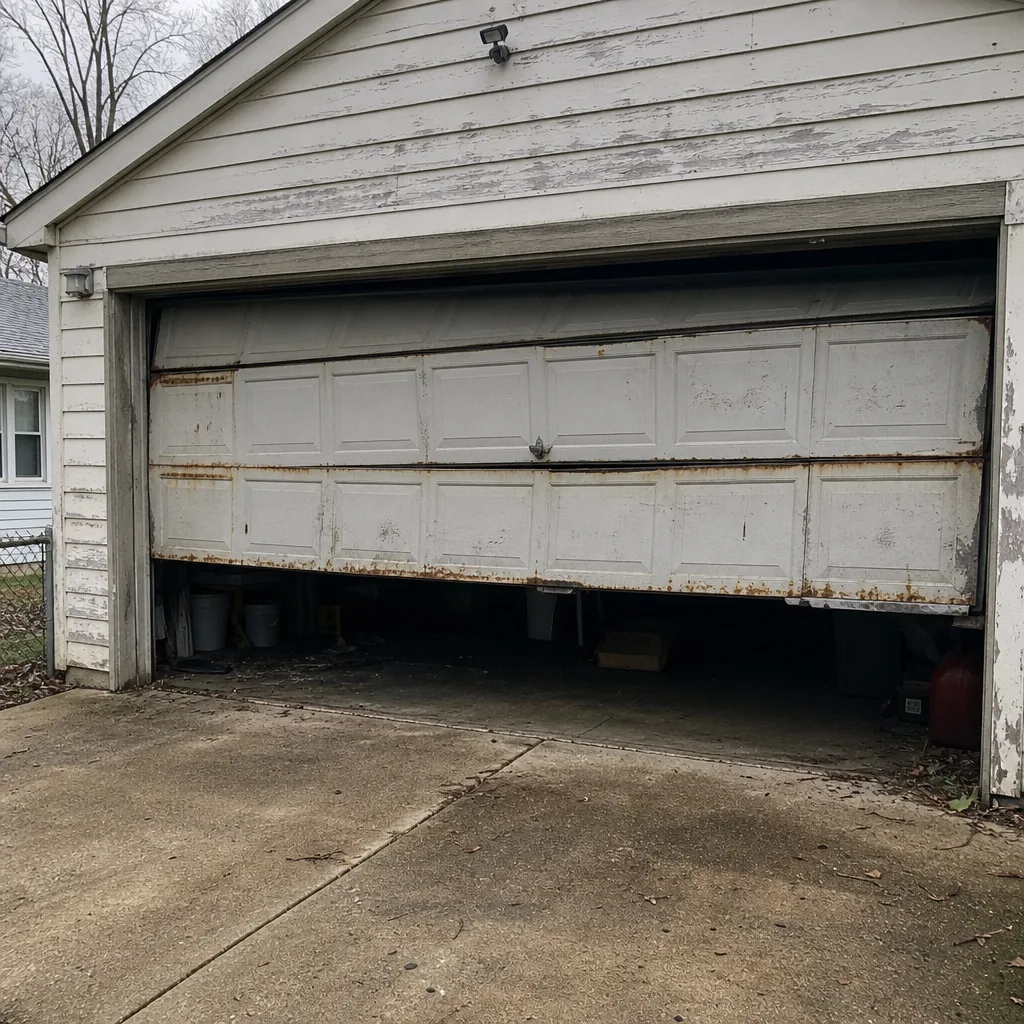 Before
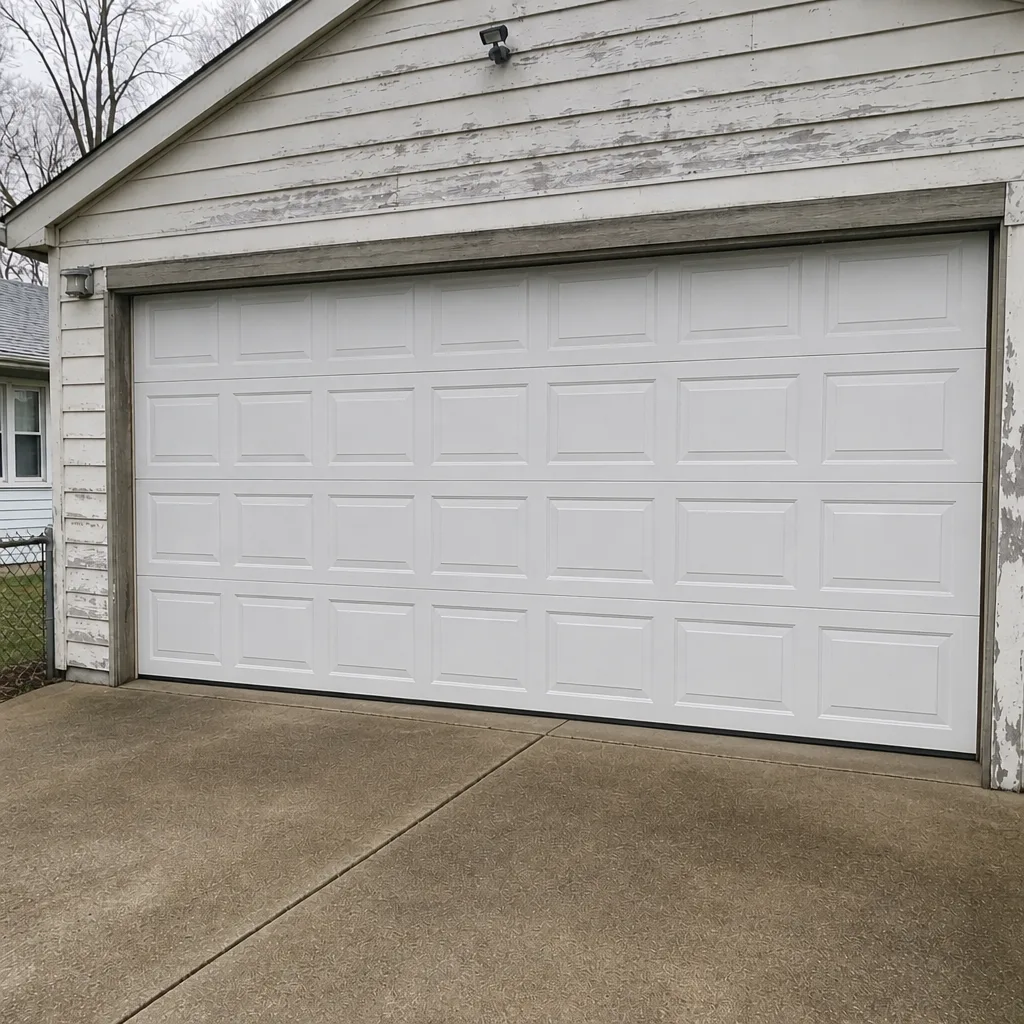 After
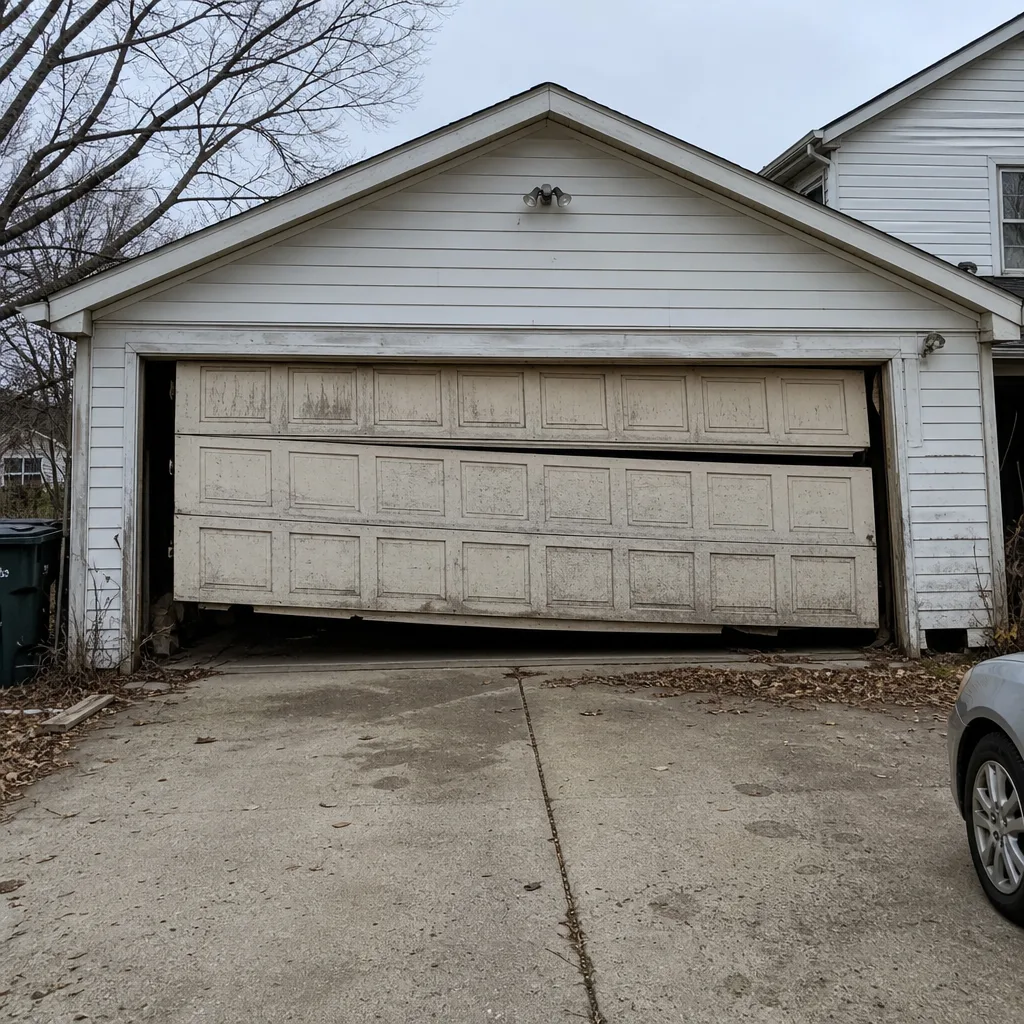 Before
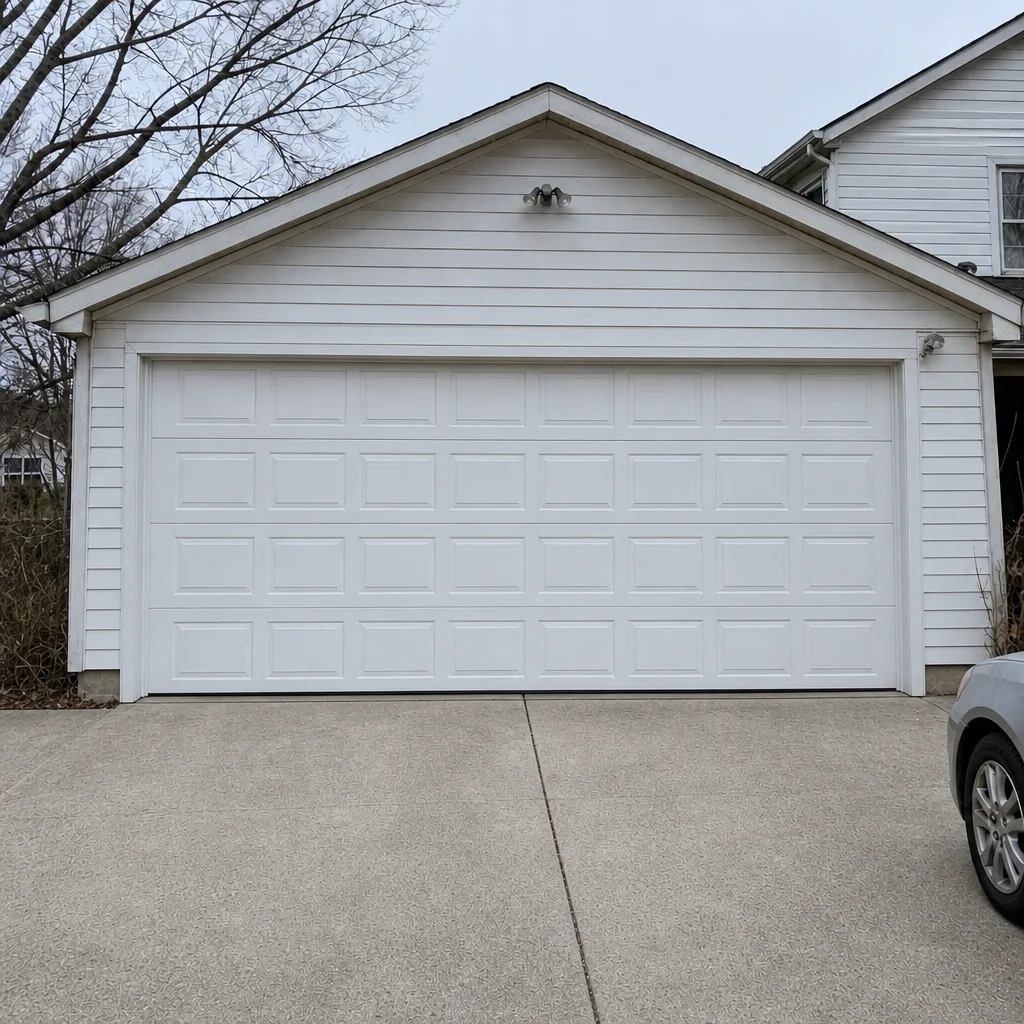 After
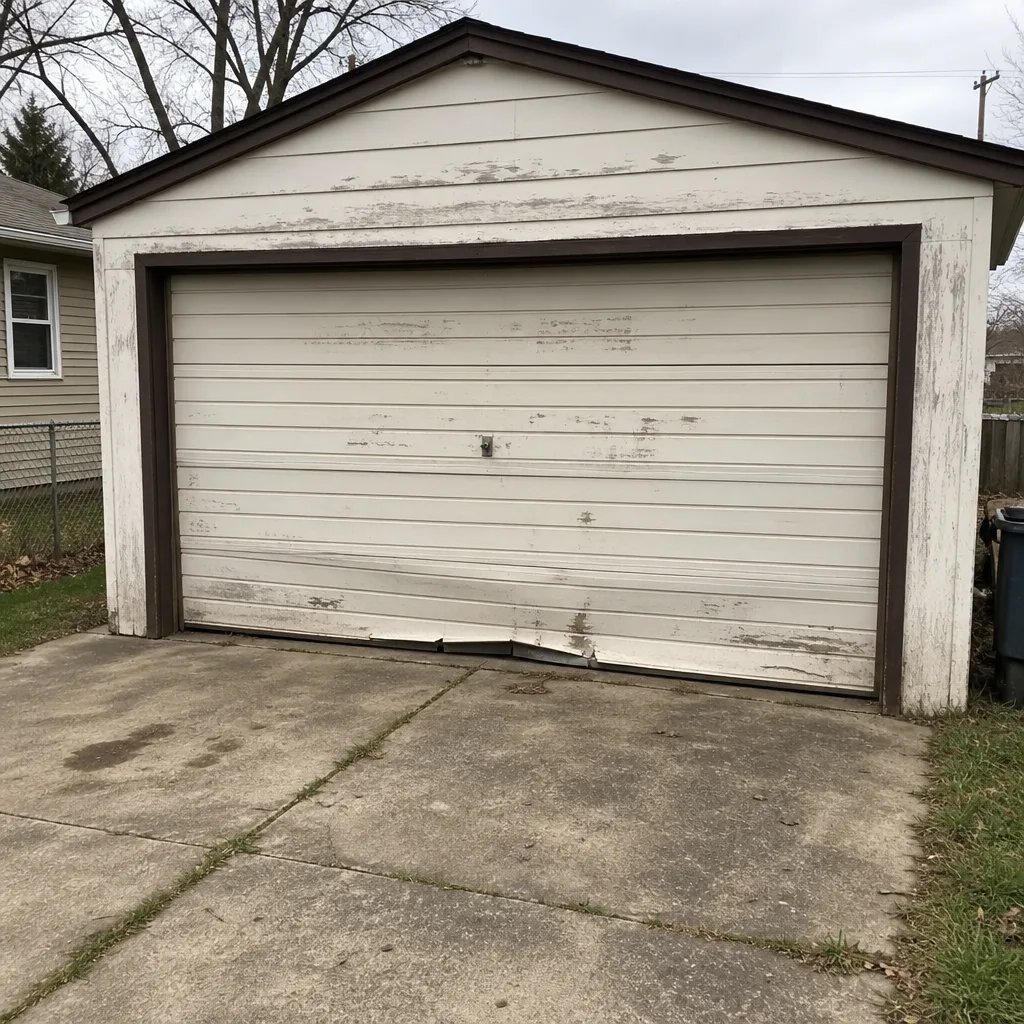 Before
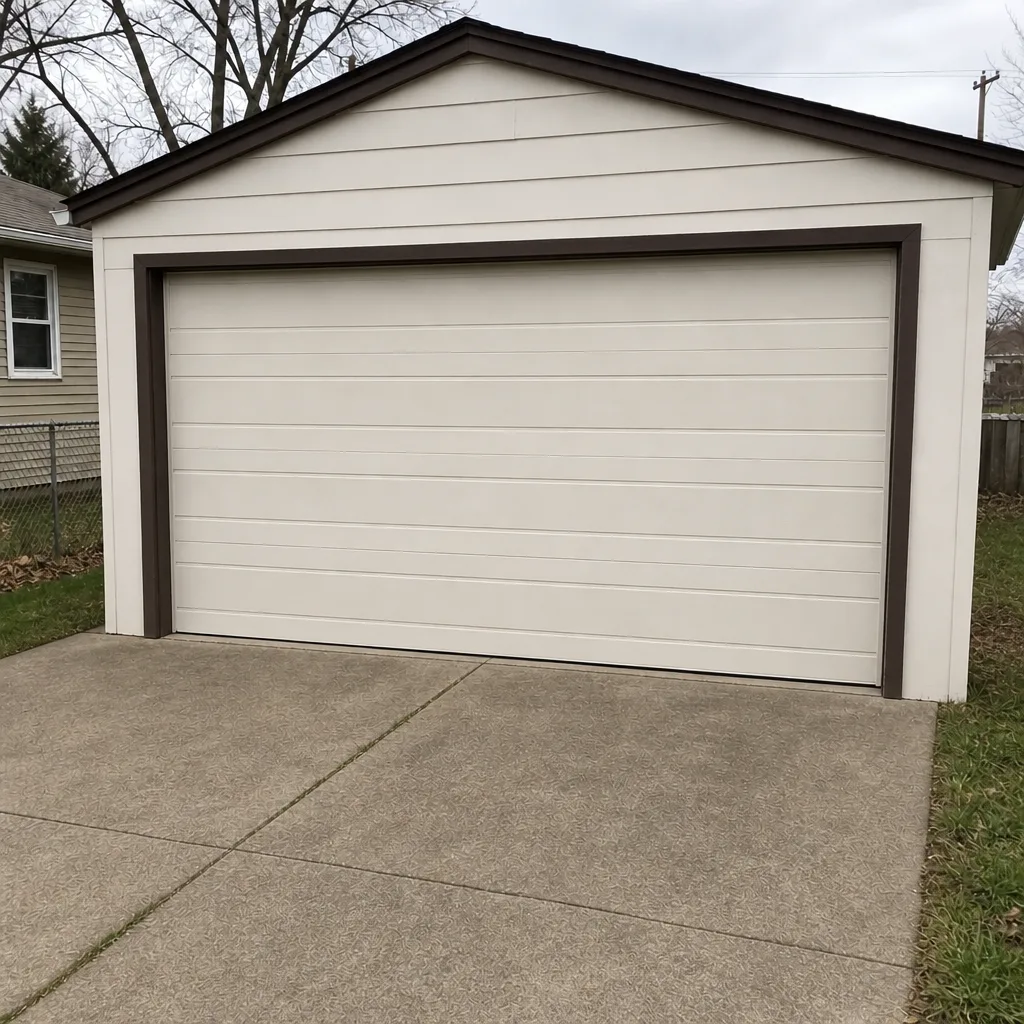 After
When to Call a Professional
Call a professional if any of these are true: a spring has snapped, a cable is frayed or slack, the top panel is bowing, the door reverses on its own during the up-travel, the door moves noticeably faster on one side, or the noise is new and getting worse. Don’t wait for a stop sign to call. A door that’s showing one of these signs but still opening is exactly the door that’s worth a scheduled visit. A technician has up to 14 years of experience across the major brands, so the diagnosis is usually quick and the estimate is free. Garage Door Repair Wanamaker offers free estimates in Wanamaker. Call (855) 593-3820. We answer 24/7. Fast dispatch from 7am to 7pm, Sunday through Friday. The price is quoted and agreed before any work starts, so the written estimate is the price.
Frequently Asked Questions
The earliest warning signs are a half-second hesitation before the door moves, a new squeal, grind, or pop on an otherwise familiar cycle, a door that lifts faster on one side, and a slightly frayed cable at either bottom corner. These signs typically show up weeks or months before the door actually fails. Catching them early is the whole point of this guide, because a small adjustment is a smaller job than a full repair. Call (855) 593-3820 for a free estimate if any of these sound familiar.
A loud popping sound, especially near the top of the door, and any noise that coincides with the door getting harder to lift are the ones that mean stop. Popping usually points to binding or stress on the torsion hardware, and the forces up top are high. A consistent squeak is less urgent, though it should still be looked at. If you’re not sure which noise you have, don’t cycle the door to figure it out. Call (855) 593-3820 and describe it.
No. A torsion spring stores enough force to cause serious injury, and a spring that snaps or releases without warning can do so even when the door looks normal. Spring repair is a specialized job, and it’s a dedicated service at our company for that reason. Don’t try to lift the door by hand to check, and don’t try to reattach the spring. Call (855) 593-3820 and we’ll get a trained technician out to replace it.
Once a month for a quick visual and a listen, and once per season for a professional check. The Wanamaker seasonal swing from cold winters to humid summers is what works the hardware hardest, and a check at the start of each season catches rollers, cables, and springs before the change in weather finishes them off. The monthly homeowner check takes three minutes. Call (855) 593-3820 to book a seasonal check with a free estimate.
Call a specialist. Garage doors are all we do, and the difference shows up in the diagnosis. A generalist often starts with the opener because that’s the part they understand, while a specialist reads the door and the opener together and knows which is causing the warning sign. We work on the brand you already have, including Clopay, Amarr, Wayne Dalton, and Craftsman. Call (855) 593-3820 for a free estimate.
Yes, though it rarely needs an emergency call unless it comes with one of the stop signs. An uneven bottom gap usually means a cable has stretched or the door is out of balance, and a balance issue puts extra load on the opener and springs. Left alone, that load is what turns a small adjustment into a bigger repair. Call (855) 593-3820 if the gap is new or growing; the estimate is free.
The Bottom Line
Garage door failures don’t usually arrive without warning. They announce themselves first as a hesitation, a new noise, a wobbly lift, or a slightly uneven gap. A broken spring, a snapped cable, or a door that reverses on its own is the stop sign. Everything else gives you days or weeks to act. The strategy that pays off is catching the signs on the door’s own cycle before they become a stop signal. If you’ve spotted one, call (855) 593-3820 for a free estimate. We answer 24/7. Fast dispatch from 7am to 7pm, Sunday through Friday. Visit the Garage Door Repair Wanamaker home page for the full service list.
Written by the team at Garage Door Repair Wanamaker.